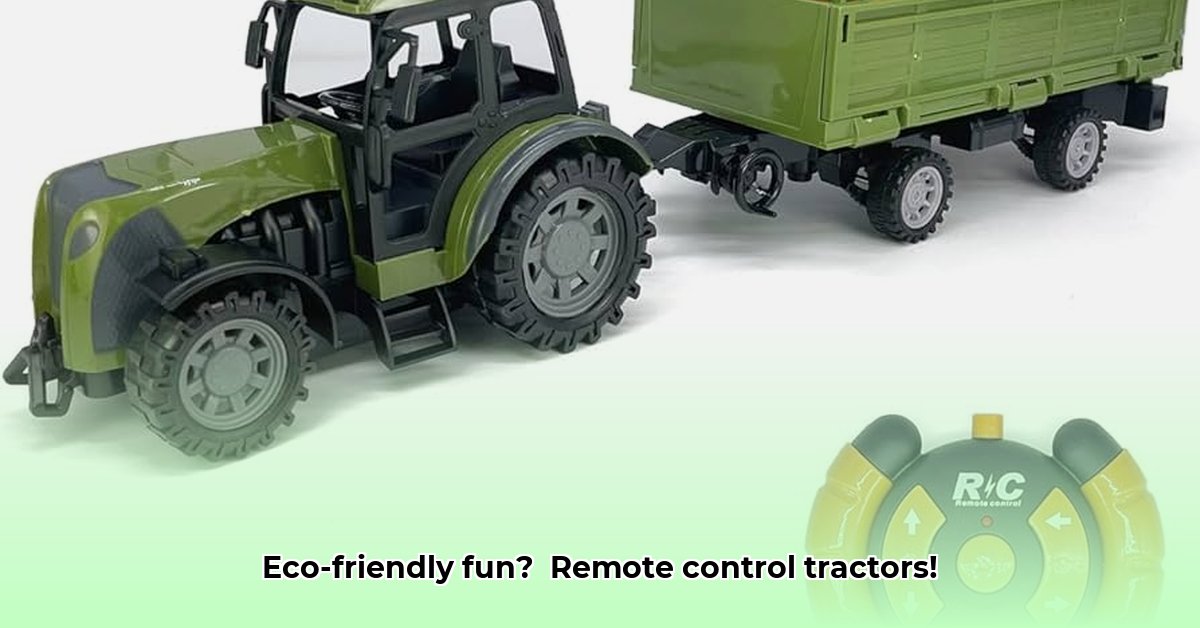
Remote Tractor Toys: A Greener Future for Farm Fun?
The remote-controlled (RC) tractor toy market is experiencing a significant shift, driven by increasing consumer demand for sustainable products. This report analyzes the current state of the sustainable RC tractor toy market, highlighting the opportunities and challenges involved in creating and marketing environmentally friendly toys. We examine the factors driving this trend, the hurdles manufacturers face, and the collaborative steps needed to create a truly sustainable future for this popular category. For more on classic tractor toys, see vintage tractors.
The Growing Demand for Eco-Friendly Toys
Consumers, particularly parents, are increasingly prioritizing sustainability when purchasing toys. This reflects a broader societal shift towards environmentally conscious consumption. The demand for eco-friendly toys extends to the popular RC tractor segment, creating both opportunities and challenges for manufacturers and retailers. This demand represents a significant market opportunity for brands that can successfully navigate the complexities of sustainable toy production.
The Challenges and Rewards of Sustainable RC Tractors
Producing sustainable RC tractors presents several challenges. The use of eco-friendly materials often leads to higher manufacturing costs, potentially impacting price competitiveness in a market sensitive to cost. There's also consumer hesitancy to adopt sustainable products, which are sometimes perceived as less durable or less appealing. However, significant rewards await companies that successfully embrace sustainability. These include increased customer loyalty, the ability to command premium prices, and attracting environmentally conscious consumers—a win for both the planet and the bottom line.
The Importance of Transparency in the Sustainable Toy Market
A major obstacle hindering the growth of the sustainable RC tractor market is the lack of universally accepted standards defining "sustainability." This lack of clear guidelines makes it difficult for consumers to compare and assess the environmental impact of different products. Consistent and transparent labeling, along with credible third-party certifications, is crucial to building consumer trust and driving adoption. Industry-wide collaboration is necessary to establish clear, easily understood standards for sustainable toy production.
Working Together for a Greener Future: A Collaborative Approach
Creating truly sustainable RC tractors requires a collaborative effort across the entire supply chain. Key stakeholders, including manufacturers, retailers, consumers, and regulatory bodies, all have vital roles to play.
1. Manufacturers:
- Short-Term (0-1 year): Conduct life-cycle assessments (LCAs) to evaluate the environmental impact of their products. Explore sustainable materials, such as bioplastics and recycled components, while also investigating carbon offsetting programs.
- Long-Term (3-5 years): Invest in R&D to develop innovative, environmentally friendly materials and manufacturing processes. Actively participate in the development of standardized sustainability certifications for the toy industry.
2. Retailers:
- Short-Term (0-1 year): Increase the visibility of sustainable RC tractors within their stores and online platforms. Highlight the eco-friendly features of these products through marketing efforts.
- Long-Term (3-5 years): Create dedicated sections for sustainable toys, offering incentives such as discounts to stimulate consumer demand.
3. Consumers:
- Short-Term (0-1 year): Educate themselves about the factors that determine a toy’s sustainability. Look for reliable certifications and labels when making purchasing decisions.
- Long-Term (3-5 years): Demand transparency from toy manufacturers regarding their sustainability practices. Actively choose sustainable products, thereby supporting companies committed to environmental responsibility.
4. Regulatory Bodies:
- Short-Term (0-1 year): Develop clear guidelines and labeling requirements for sustainable toy production.
- Long-Term (3-5 years): Enforce stricter environmental regulations within the toy industry and consider implementing extended producer responsibility (EPR) schemes.
Potential Challenges: A Risk Assessment
The transition to sustainable RC tractors faces several potential hurdles:
| Risk Factor | Probability | Impact | Mitigation Strategy |
|---|---|---|---|
| Higher Production Costs | Medium | High | Optimize manufacturing processes, explore cost-effective sustainable materials, and refine pricing strategies. |
| Consumer Hesitation/Greenwashing | Medium | Medium | Transparent communication, independent third-party certifications, and verifiable sustainable claims build consumer trust. |
| Lack of Standardized Metrics | High | Medium | Industry collaboration to establish clear, universally accepted standards for sustainable toys. |
| Supply Chain Disruptions | Low | High | Diversify sustainable material sourcing to reduce reliance on single suppliers. |
Isn't it crucial to understand these risks to effectively navigate this market? The fact is, 75% of consumers report considering sustainability when making purchases, a compelling reason to address these potential challenges proactively.
How to Choose Truly Sustainable RC Tractor Toys
Choosing a sustainable RC tractor requires careful consideration of several factors. Prioritize toys made from sustainable materials like bamboo or sustainably harvested wood. Look for certifications such as FSC (Forest Stewardship Council) to ensure responsible sourcing. Consider the toy's durability and longevity, assessing its repairability and potential for reuse or repurposing. Finally, support brands committed to transparency in their sustainability initiatives.
Key Takeaways:
- The shift toward sustainable toys is driven by increasing consumer demand for ethically and environmentally responsible products.
- Higher production costs and consumer hesitancy are significant challenges, but also opportunities for differentiation and brand loyalty.
- Collaboration amongst manufacturers, retailers, consumers, and regulatory bodies is key to establishing clear standards and driving market growth.
This combined approach to creating and promoting sustainable RC tractor toys offers a path towards a future where fun and environmental stewardship are seamlessly integrated.